INSTITUTE OF TECHNOLOGY OF CAMBODIA

Author: admin hre

  • Department of Rural Engineering (GRU) organized the Dissemination Workshop on Climate Change and Wat

    Department of Rural Engineering (GRU) organized the Dissemination Workshop on Climate Change and Wat

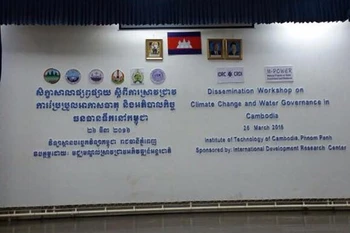
    Department of Rural Engineering, Institute of Technology of Cambodia (ITC), organized the “Dissemination Workshop on Climate Change and Water Governance in Cambodia” at ITC, Phnom Penh, on 26 March 2016. The main objective of this workshop is to disseminate research findings from the IDRC funded project “Climate Change and Water Governance in Cambodia” to university students. The Climate Change and Water Governance in Cambodia project (CCAWG) was funded by the International Development Research Centre (IDRC) and is being completed by CDRI in collaboration with the Ministry of Water Resources and Meteorology (MOWRAM), Ministry of Environment (MoE), Tonle Sap Authority (TSA), Institute of Technology of Cambodia (ITC), Royal University of Agriculture (RUA), and Mekong Programme on Water, Environment and Resilience (M-POWER).

    There were in total 316 people, from 19 different organizations, attending the workshop (see table below).

    The workshop was divided into three main sessions: opening and introduction session, plenary session, and main session. In the opening and introduction session, Dr. Chunhieng Thavarith, Deputy Director General of ITC, opened the workshop. He remarked that the workshop is relevant to Cambodian society which is confirmed affected by climate change. Students and all participants are expected to get knowledge on impacts of climate change on people’s livelihoods in rural areas of Cambodia and adaptation practices. After the opening remark, Dr. Chem Phalla, Acting Research Director of Cambodia Development Resources Institute (CDRI), gave a brief introduction to the project: Climate Change and Water Governance in Cambodia funded by the International Development Research Centre (IDRC).

    There were two presentations in the plenary session. The first one was provided Dr. Heng Chanthoeun, Deputy Director of Department of Climate Change, Ministry of Environment. He talked about “Historical Climate Trends and Climate Change Projections for Cambodia”. His analysis showed that the change in annual rainfall in Cambodia is 0.03-0.11% under the emission scenario: RCP 4.5 and 0.02-012% under the emission scenario: RCP 8.5. The second presentation was given by Dr. Oeurng Chantha, Deputy Head of Department of Rural Engineering and Senior Researcher of ITC. The title of his presentation is “Community Based Adaptation to Climate Change: Examples from Two Rural Affected Communities due to Floods and Drought.”

    During the main session, there were four presentations. First of all, Mrs. Sam Sreymom, Acting Unit Head of CDRI, presented about “Governance for Water Security and Climate Resilience in the Tonle Sap Basin.” To reach a resilient water governance, she raised five key elements: (1) Architecture: building technical, administrative and managerial capacity & cooperation, (2) Agency: acknowledging roles of various actors and enhancing their interactions, (3) Addictiveness: building local capacity in coping with climate change and promoting D&D, (4) Accountability: promoting two-way dialogue between institutional stakeholders and credible M&E, and (5) Access & Allocation: improving access and its challenges. Then Mr. Tes Sopharith, Senior Researcher of M-Power, presented about “Assessment of Water Resources for Improved Water Governance under Climate Change-Stung Chinit Catchment.” He found that, in the study area, climate change leads to a lower dry season flow in November-May and March-July. Such impacts result in scarcity of water for irrigation, meaning that rice production is negatively affected. Thirdly, Mr. Nong Monin, Researcher of CDRI, presented about “Climate Change Vulnerability in Three Tonle Sap Catchments-a participatory assessment.” He found that the three study areas: Stung Chinit in Kampong Thom Province, Stung Chrey Bak in Kampong Cham Province and Stung Pursat in Pursat Province are vulnerable to climate change in form of flood and drought. The study suggests to improve the physical assets focusing hard infrastructure and technological innovations, and to strengthen knowledge of modern crop varieties more resilience to drought and flood in simple and applicable strategies, etc. Lastly, Dr. Oeurng Chantha presented about “Assessment of Water Resources for Improved Water Governance under Climate Change-Stung Chrey Bak Catchment.”

    There was an active discussion (questions and answers) after each presentation. It is concluded that participants get a better understanding of the implications of hydrological and ecosystem changes caused by climate change and human changes on livelihoods in the Tonle Sap Basin as well as knowledge on methods to integrate these research findings into Cambodia’s policy and planning frameworks.

  • Four lecturers from ITC-GRU attended the workshop on geoscience supporting risk management, water an

    Four lecturers from ITC-GRU attended the workshop on geoscience supporting risk management, water an

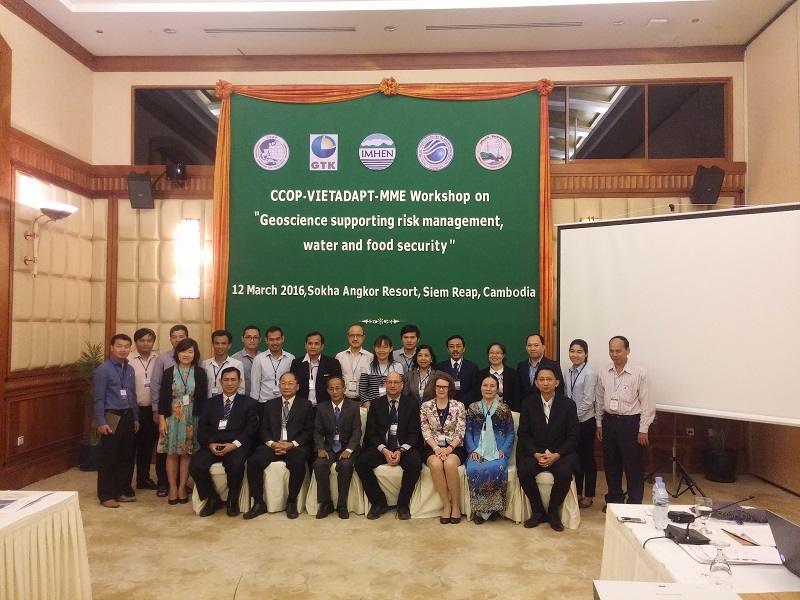
    Dr. Heng Sokchhay, Dr. Doung Ratha, Dr. Ly Sarann and Mr. Lun Sambo, lecturer/researcher from Department of Rural Engineering (GRU), Institute of Technology of Cambodia (ITC), on 12 March 2016, attended the CCOP-VIETADAPT-MME Workshop on “Geoscience supporting risk management, water and food security”. The workshop was conducted at Sokha Angkor Resport, Siem Reap. The workshop was organized by Technical Secretariat of Cooperating Committee for Geoscience Programmes (CCOP), in cooperation with the Geological Survey of Finland (GTK), VIETADAPT Project and the General Department of Mineral Resources, Ministry of Mines and Energy of Cambodia (MME). There was also participation from researchers and experts from Finland, Indonesia, Myanmar, Thailand, Philippines, and Vietnam. The aim of the meeting is to identify possibilities for geosciences to support South and South-East Asian societies in safeguarding water and food resources.


    This workshop presents the results of some ongoing projects that have assessed such risks to natural and agricultural resources. The workshop covers three main topics: (1) geoscience and food security, (2) vulnerability analyses for water supply and (3) climate change adaptation for water resource management. Representing ITC-GRU and Cambodia, Mr. Lun Sambo made a presentation of his research results in Session 1: geoscience and food security. The title of his presentation is “Can groundwater secure drinking-water supply and supplementary irrigation in new settlements of North-West Cambodia”. Since it is a single topic talking about groundwater in Cambodia, the presentation attracted many audience and this led to a very active discussion after Mr. Lun Sambo’s speech. Other resource persons shared similar experiences from their country. In the closing ceremony, Dr. Adichat Surinkum, CCOPTS Director, remarked that we should integrate groundwater issue into water resources management policies. Shortly, this one-day meeting brought many new idea/knowledge to participants and further studies on groundwater-related field in Cambodia might come up in the near future. If it is the case, the risk on water and food security in Cambodia in the future could be maintained at minimum.
  • A special lecture on MIKE 21 and MIKE 11 given by DHI

    A special lecture on MIKE 21 and MIKE 11 given by DHI

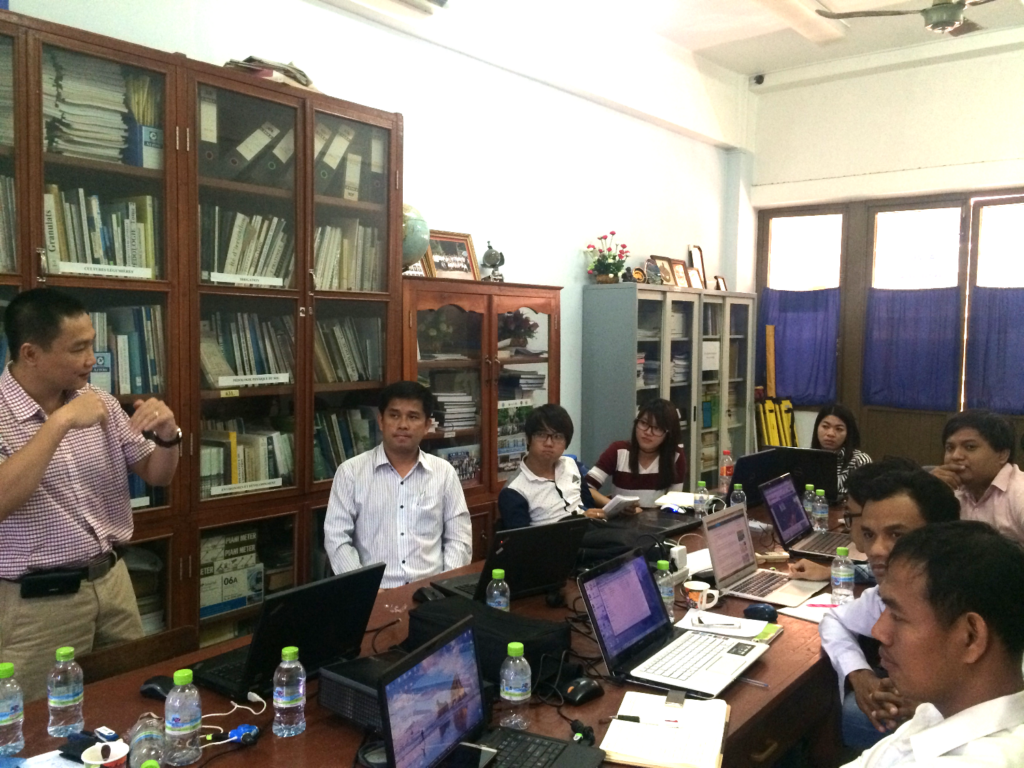
    DHI kindly provided a special lecture on MIKE 21 and MIKE 11 to lecturers and students of Department of Rural Engineering, Institute of Technology of Cambodia (ITC). This free training took place on 2 March 2016, at ITC, Phnom Penh. The participants got advance knowledge on how the physical processes of hydrology, hydrodynamic, water quality, sediment transport and river bank erosion are modeled in the said MIKE software. The most up-to-date and cutting-edge technology in water modeling is very interesting. A number of case studies were presented to confirm the power of these modeling tools in solving environmental problems around the world. A sincere thank is given to DHI-Singapore for the arrangement of such useful training on the topics which are timely needed in Cambodian society.

  • Short Course on Applications of Pumping Equipment: Planning, Design, and Application

    Short Course on Applications of Pumping Equipment: Planning, Design, and Application

    OLYMPUS DIGITAL CAMERA

    Department Rural Engineering (GRU) in collaboration with Ebara Hatakeyama Memorial Fund (EHMF) organized a two days short course (February 24-25, 2016) on applications of pumping equipment by focusing on planning, design, and applications. This training addressed to government agencies and public sectors, consulting firms and private industries, and academic institutions and universities. There were more than 100 participants joined the training.

    Dr. Thavarith CHUNHIENG, deputy director general of ITC, opened the ceremony. He emphasized that it was very useful that GRU had organized this regular seminar in order to enhance the knowledge of students, technicians, and practioners involving in the sector. He also highlighted that GRU had been providing the master degree on water resources management which, indeed, covers the application of pump in various sectors such as flood control, water supply, irrigation and so on.

    The objectives of this short course is to enrich capacity and skills of participants in practical engineering fields through making review on turbo type pump, studying essentials and applications including design point, control and energy saving methods in operations. The training were provided by Mr. Yamada and Mr. Yamagishi, which mainly covered:

    1. Classification of Pumps
    2. Essential of Pump Technology
    3. Determination of Pump Requirement Application in Water Works
    4. Control for Energy Saving
    5. Case Study: Comparison of Energy Consumption

    EBARA Corperation, founded in 1912, had main businesses involving fluid machinery and related systems such as pump and compressors, which were used for infrastructure such as for water and sewage systems, irrigation and flood control. Under the slogan of “Ebara should coexist with regional communities”, Seiji Hatakeyama, the fifth president of EBARA Corperation, founded the EBARA Hatakeyama Memorial Fund (EHMF) in 1989 to assist infrastructure development and improvement around the world by offering technologies and rich experience accumulated by EBARA.

    Here on ITC, EBARA held 8 times of the technical seminar from 2002, about 600 students and engineers participated. Another program of EHMF is “Assistance for Investigation” EHMF had extended to donate pumps appropriate materials which were useful for the classes and investigations of students and researchers. EHMF donated a booster pump unit, cutaway pumps and attachments to ITC which would provide additional equipment for learning and experiments for more 100 students.

    H.E. Dr. Romny OM, Director General of ITC, presided the donation ceremony and closed the seminar. He thanked EBARA Corporation for continuously providing technical support to ITC, specifically to the department of rural engineering. For instance, EBARA donated pump units for ITC. Mr. Minoru Takano, specialist consultant of EBARA Corporation, highlighted the long collaboration between both parties and he wished the friendship between ITC and EBARA would be deepened.

    #Shortcourse #pumping #watersupply

  • A GRU student has been selected to participate in the 2nd SEAMEO Youth Leadership Forum in Thailand

    A GRU student has been selected to participate in the 2nd SEAMEO Youth Leadership Forum in Thailand

    A GRU-Year 5 student, MEN Vuthy, has been selected to participate in the 2nd SEAMEO Youth Leadership Forum from the 7th to the 11th of March 2016 at Holiday Inn Bangkok, Thailand. After thorough review by the Selection Committee of 1,051 applications from the 11 SEAMEO-member countries and ASEAN+3 countries, 44 candidates including MEN Vuthy were selected. He and other two Cambodian students are representative of Cambodia during this great event. For more information, please visit http://www.seameo-spafa.org/YLF2016/. It is also noted that MEN Vuthy is currently undertaking an exchange program at Tokyo University of Agriculture and Technology, Japan. Congratulation!

  • Delegates from UiTM and WHB (Malaysia) for research and academic cooperation on Solid Waste Manageme

    Delegates from UiTM and WHB (Malaysia) for research and academic cooperation on Solid Waste Manageme

    A group discussion on Solid Waste Management (SWM) was conducted at Institute of Technology of Cambodia (ITC) on January 27th, 2016. This meeting was prepared following the MoU which was signed in July 2015 by three relevant partners including ITC, University of Technology Mara (UiTM), and Worldwide Holdings Bhd (WHB). The main objective of this meeting is to propose the collaboration research on solid waste management and exchange program for undergraduate and graduate students. In addition to the representatives from these institutions, Ministry of Environment (MOE), Cintri Co LTD (responsible for SWM cleaning, collection, and transportation in Phnom Penh) also joined the meeting. There are totally 28 participants. The main topics of this meeting included:

    1. Solid Waste Cooperation
    2. Composting and Leachate Treatment Technology
    3. Reduce, Reuse, and Recycle
    4. Renewable Energy Technology
    5. Modeling and Forecasting.

    This meeting started at 8:00 am. Dr. Sarann LY, Head of Rural Engineering Department at ITC introduced the participants from Cambodia and then Mr. Zamri Abdul Rahman, General Manager Environment at WHB, introduced the delegate from Malaysia including UiTM and WHB.

    Mr. Zamri introduced the about WorldWide Holding activities in Malaysia specializing on consultancy & construction, renewable energy, sanitary landfill, inert waste landfill, and material recovery facilities. Concerning SWM, this company is managing 3 sanitary landfills surrounding Kula Lumpur city which receives about 5,000 tons of solid wastes per day.

    Dr. Marfiah Ab. Wahid, Head Center of Study Water Resources and Environmental System (WRES) presented the curriculum of the University of Technology Mara concerning post graduate program at the faculty of engineering. In this faculty, there are four center of studies including structural and materials (StrucM), Geotechnical & Transportation Engineering (Geo Tren), Water Resources and Environmental Systems (WRES), and Construction Business & Project Management (CBPM). This faculty also provides dual program degree with university in Germany. Follow such collaboration, Dr. Marfiah has proposed to initiate the program between department of rural engineering (GRU) at ITC with UiTM. Dr. Sarann welcomed her proposal and he will consider with the department and ITC board on this issue.

    Mr. NGET Vibol, Vice Chief of Solid Waste and Hazardous Waste Management from MOE, presented in detail about the role and responsibility organization on SWM. He also highlighted about existing laws and regulations concerning to environmental quality protection. MOE has long vision to create environmental court. Up to date, several laws have been created: solid waste management, water pollution control, air pollution and noise disturbance, environmental impact assessment, ozone layer protection, and municipal waste management (for decentralization implementation). The recent sub-decree (MWM) give authorization to local authority to manage the waste in the region, therefore they can sign contract directly with private companies to manage the waste. To strengthen this sub decree, MOE also cooperate with Ministry of Interior as they are local authority and can contribute to strengthen this law. Regarding the SW collection, he added that, there are actually waste separation, which base on values of water (recycle waste). Currently, Cintri collect up to 2000 tons of SW per day and it just about 70-80% of waste generating in Phnom Penh. The remaining are uncollected. Up to 60% of SW collection nationwide are domestic waste.

    Mr HENG Dimach, Operation Supervisor in Kuol Kork Commune presented about background of Cintri which was created in 2002 to clean, collect and transport solid waste in Phnom Penh to landfill. He also emphasized the purpose of the company to keep the city clean. Then he followed with the activities and structures of the company. Several types of collecting facilities were also presented. In order to clean and collect the waste, the base staffs face various challenges such as narrow road, inaccessible roads (unpaved), safety during the street cleaning. The negative behaviors of citizen also produce more burdens as well. Many of them do not put the waste in the provided bin or dumpster. Then many of them also put waste anytime they want. After the national event, huge amount of waste also generate. To manage the truck, all dump trucks are equipped with GPS for tracking there location.

    Dr. Sarann briefly presented about background of ITC. Then he talked in detail about the curriculum of the Department of Rural Engineering (GRU) in undergraduate and graduate program. He also highlighted the relevant expertises the graduates from the departments which correspond to water resources management, water supply and sanitation, rural infrastructures, and so on. Beside these the department staffs also conduct several researches in water resources covering on Tonle Sap Lake basin and others. Then he finalizing the talk by showing the available equipments in the laboratory of the department.

    Dr. Bunrith continued with a glance of the solid waste management in Cambodia. There are two main companies responsible in the sectors: Cintri Co Ltd (Phnom Penh, Sihanouk Ville, Battambang, and Kampong Cham), Global Action for Environmental Awareness (GAEA: Siem Reap, Banteay Meanchey, Kampong Thom, Kampot). Dr. Bunrith also re-emphasized on the existing legal structures in the country concerning the sector. The problem relating to the SW were on soil pollution, health impact, water and air pollution. Proper SWM was needed to solve these problems. He briefly showed the important landfill in the country including Phnom Penh, Battambang, Siem Reap, and Sihanouk Ville.

    On the same day, there was also solid waste management awareness prepared by undergraduate students (6) from UiTM sharing with ITC’s undergraduates (22). This awareness was focus on the 3R (reduce, reuse, and recycle). This practice can contribute to reduce the solid waste generating in the city.

    On the 2nd day, the team continued to visit the Ministry of Environment, landfill, and Cintri’s Garage and Supply office. The WHB also gave the souvenir to Cintri during this visit.

    The meeting was great initiation to further cooperation as the exchange program has been proposed. Also, the joined research proposal on solid waste management will be developped in the near future.